Locum tenens in 2025: Understanding locum physician motivations
December 3, 2025
The healthcare landscape is evolving, and with it, the role of locum tenens physicians is becoming increasingly critical. The 2025 State of Locums Report from CHG Healthcare sheds light on this dynamic workforce, revealing how locum tenens is helping healthcare organizations address staffing gaps while offering physicians greater flexibility, control, and career satisfaction.
This report highlights the growing demand for locum tenens, which physicians are choosing this career path, and what motivates them to take on temporary assignments. From financial incentives to improved work-life balance, the findings provide a clear picture of why more doctors are embracing locum tenens as a sustainable and rewarding career option.
Growing demand for locum tenens

The need for locum tenens physicians is accelerating. In 2024, healthcare organizations’ actual locum utilization was 25% higher than projected, reflecting stronger-than-expected reliance on the locums workforce to help maintain continuity of patient care. Looking ahead, as many as 80% of facilities expect flat or growing use of locum tenens by 2025.
Why there's a demand for locum tenens physicians
The top reason facilities bring in locum tenens providers is to fill a role until a permanent candidate is found (67%). Recruiting full-time physicians can take months—or even longer in some specialties—and locum tenens helps bridge that gap to help maintain continuity of care.
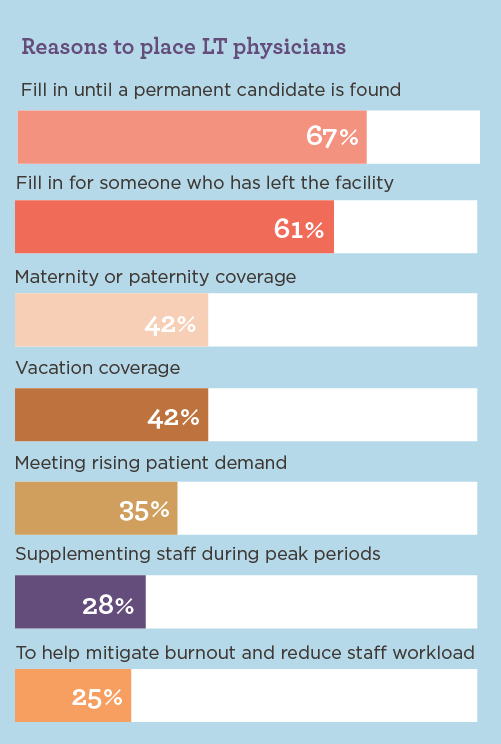
Similarly, 61% of healthcare organizations use locum tenens to cover for a physician who has left the facility. Turnover, retirements, and shifting career priorities mean vacancies are inevitable, and locum tenens physicians provide immediate, qualified coverage to keep departments running smoothly.
Coverage needs extend beyond turnover and recruiting delays. Nearly half of facilities use locum tenens for maternity or paternity leave (42%) and vacation coverage (42%), helping prevent gaps in service while supporting a healthier work-life balance for their full-time teams.
Streamline your hiring process: 4 steps for recruiting a future-ready workforce
Why many physicians are turning to locum tenens
Financial motivation remains one of the strongest drivers behind the shift to locum tenens. Nearly half of physicians (47%) say they take locum tenens assignments to supplement their core income, and another 30% cite the appealing salary as a key reason. With competitive pay rates averaging around $239 per hour, locum tenens allows physicians to increase their earning potential, pay down debt, or build financial security without long-term commitments.
Flexibility is another strong draw. Approximately 29% of physicians choose locum tenens to control their own schedules, giving them the freedom to balance work with personal priorities, travel, or family life.
For 26% of respondents, locum tenens also serves as a bridge while searching for a full-time position—a way to stay clinically active, maintain income, and explore different practice environments before making a long-term decision.
Who is working locum tenens (all career stages)
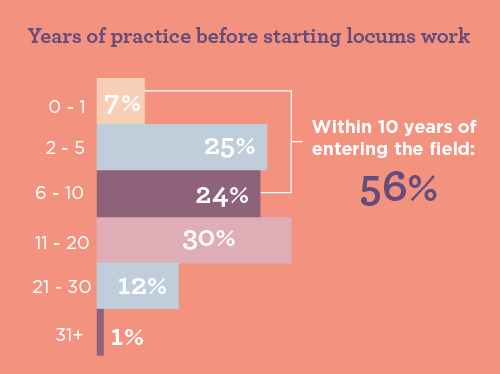
Physicians are embracing locum tenens work at every stage of their careers. While motivations may vary, the flexibility and autonomy of locum tenens make it a universally appealing choice. In fact, the majority of locum physicians (56%) begin working locum tenens within 10 years of entering the field.
Early-career physicians
For many new physicians, locum tenens provides an opportunity to build experience and confidence after completing residency or fellowship. About one-quarter of physicians (29%) start locum tenens after two to five years of practice, using it to explore different clinical environments, test out new locations, and gain a better sense of what type of long-term position, practice setting, and lifestyle they want.
Still, some delay in making the move. Half of physicians (50%) who waited to start locum tenens say they did so because they were focused on securing a full-time role. In comparison, others cite income stability (30%) and the desire to gain more professional experience (28%) as reasons for not taking on locum tenens work. For many, though, once they try locum tenens, the advantages of choice and control are hard to ignore.

Mid-career physicians
Mid-career doctors often turn to locum tenens to rediscover balance and satisfaction in their work. After years in demanding full-time roles, many are seeking ways to manage their time more effectively or to step away from the administrative burdens that contribute to burnout. Approximately 30% of physicians entering locum tenens have 11-20 years of experience, representing a large portion of today’s locum workforce.
These physicians tend to value the flexibility to choose assignments that align with their professional goals—whether that means exploring a new specialty focus, working closer to home, or taking time between contracts to recharge and rejuvenate.
Late-career physicians
For physicians nearing retirement, locum tenens offers a way to stay engaged in patient care while scaling back their workload. Many late-career doctors use locum assignments to transition gradually toward retirement, maintaining their clinical skills and professional identity without the full-time commitment of permanent employment.
“I’ve worn many hats over the years: daughter, wife, mother (my favorite), volunteer, and physician. And I’m not ready to stop being a physician,” says Dr. Marye McCroskey, FAAFP. “I’m grateful I can still contribute in a meaningful way. But I am ready to slow down a little and have more control. So for now, locums is perfect.”

I’m grateful I can still contribute in a meaningful way. But I am ready to slow down a little and have more control. So for now, locums is perfect.
It’s also a chance to give back—many choose assignments in underserved areas or community hospitals where their experience can have a meaningful impact.
Whether it’s gaining early-career experience, finding mid-career balance, or staying active later in life, locum tenens offers a flexible and rewarding path that fits the evolving priorities of today’s physicians.
Why many physicians find greater career satisfaction working as independent contractors
Three-quarters of current locum tenens physicians say they’re highly likely to keep working locum assignments, underscoring the appeal of greater autonomy and control.

As independent contractors, locum physicians have the flexibility to choose when, where, and how they work—focusing on what matters most to them. Compensation is the top priority (82%), followed by schedule (69%), assignment dates (57%), patient load (55%), and location (52%).
This flexibility enables physicians to strike their own balance between work and life while maintaining focus on patient care. For many, that freedom often leads to greater satisfaction than traditional full-time employment can offer.
How locum tenens helps ease physician burnout
About three-quarters of physicians report feeling burned out, a reflection of mounting administrative pressure, long hours, and limited control over their work. The top contributors include excessive paperwork (41%), long work hours (29%), low pay (22%), and understaffing (20%)—all factors that leave many doctors feeling drained and disconnected from patient care.
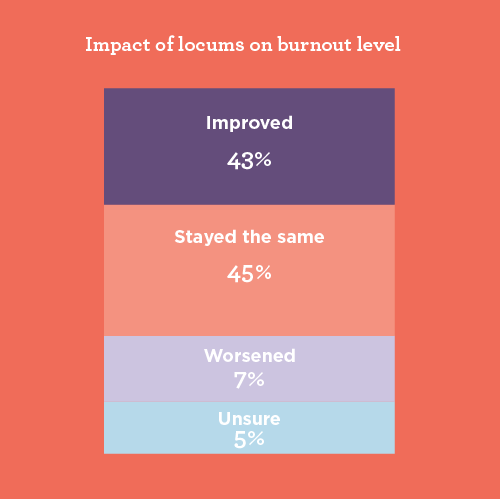
Fortunately, nearly half of physicians say their burnout levels improved after working locum tenens. By stepping away from the administrative burdens of full-time employment, locum physicians can focus more on practicing medicine and less on paperwork. They also gain the freedom to set their schedules, choose assignments that align with their goals, and take meaningful breaks between contracts.
For many, that flexibility and autonomy are the difference between surviving in medicine and rediscovering the joy of practicing it.